
Cat communication

Cat body language: read the whole cat, not one signal.

Cat body language is best read as a pattern. Compare posture, tail, ears, eyes, movement, and distance—then respond to the change you see instead of translating one signal on its own.

A relaxed tabby cat standing with the whole body and tail visible

Quick reference

Cat body language chart: match the pattern, then choose an action

These are starting patterns, not fixed translations. If signals conflict, respond to the more cautious pattern and give your cat space.

Relaxed and open

Look for: Loose body, balanced weight, soft gaze, neutral ears, unhurried movement, and a clear choice to approach or leave.

Try first: Let your cat choose the distance. If you touch, pause often and watch whether the body stays loose.

Alert and focused

Look for: Still or forward posture, eyes and ears fixed on a sound or movement, whiskers forward, or a slowly moving tail tip.

Try first: Do not reach in yet. Notice what your cat is tracking and leave room to watch, move, or settle.

Needs space

Look for: Body stiffens, head turns toward your hand, tail speeds up, ears rotate back, skin twitches, or weight shifts away.

Try first: Stop touching or approaching. Lower your hands, step back, and keep the exit open.

Fearful or defensive

Look for: Crouched or compressed posture, weight back, tucked tail, flattened ears, wide pupils, hiding, hissing, or swatting.

Try first: Increase distance and do not corner, chase, or punish. Check the health route if this pattern is sudden or persistent.

Start here when

Turn a signal into a safer next step

Body language is useful only when it changes what you do next. Start by pausing the interaction, then compare several signals in context.

Is this my situation?

This fits if

You noticed a change in tail, ears, eyes, posture, movement, distance, exits, or the surrounding situation.

Do first

Pause and give space

Stop petting, handling, reaching, or crowding. Let the signal work before it becomes a bite, swat, or chase.

Then

Compare the whole body

Look for a cluster of changes, not one isolated tail flick or ear position. Context decides the meaning.

Choose another guide if

Start with safety or health

Start with wound care if skin broke. Check the health guide if the body-language change is sudden, persistent, or linked to touch or movement.

Five areas to notice

Combine the clues

Read from the biggest visible change to the smallest detail. A single signal is only useful when it changes what you do next.

A relaxed tabby cat standing with the whole body and tail visible

Tail and whole-body posture

Start with the whole body. A raised, loose tail and balanced stance reads differently from a tucked, tense, or thrashing tail.

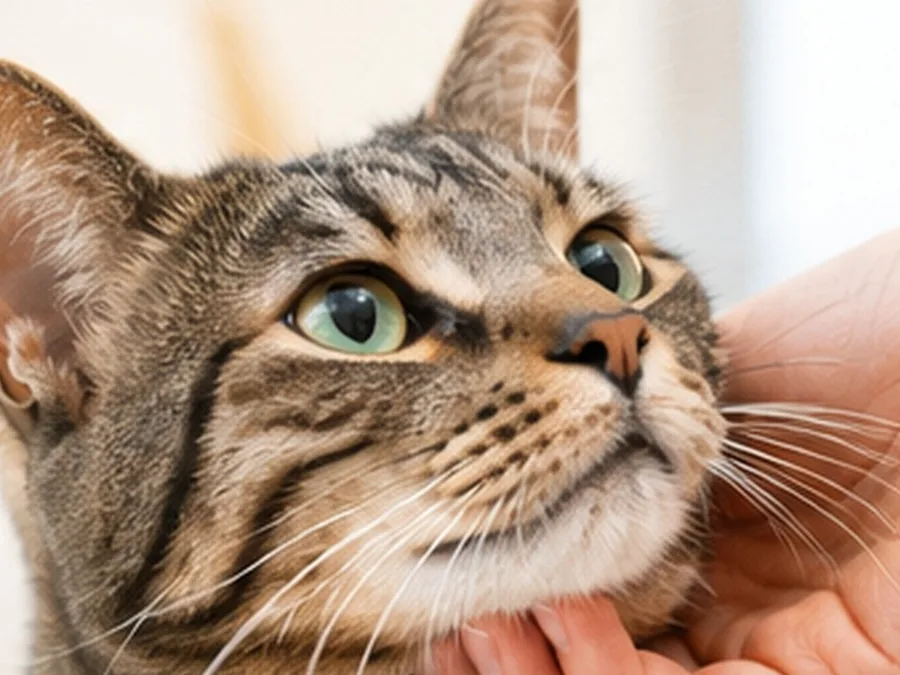
Close view of a cat's ears, eyes, whiskers, and facial posture

Ears and eyes

Ears, pupils, gaze, blinking, and facial tension help you see whether attention is relaxed, alert, or uncomfortable.

A tense cat sitting still while a guardian keeps distance

Stillness and weight shift

A freeze, crouch, lean away, or sudden weight shift often matters more than one isolated tail flick.

A cat near a doorway and food bowl with space to move away

Distance and exits

Look at whether the cat can leave. Many warning signals become clearer when you stop blocking the route.

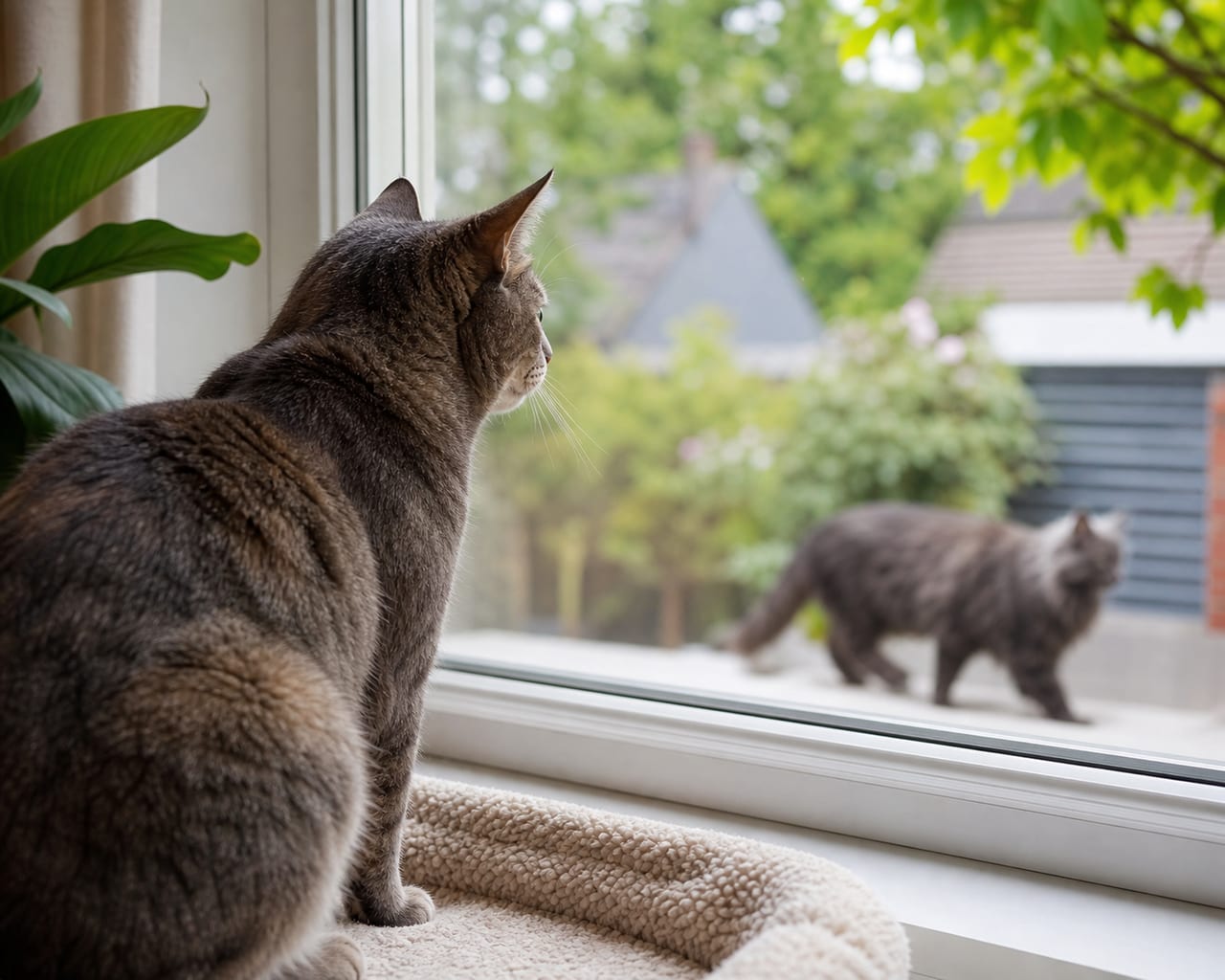
A cat looking through a window at an outdoor trigger

What the cat is watching

A cat fixed on a window, sound, smell, or another animal may be communicating arousal before you touch them.

Tail movement in context

What can a flicking, swishing, high, or low tail tell you?

A tail makes more sense as part of a change, not as a one-word translation. Look at the movement, whole-body tension, distance, and what is happening around your cat.

A flicking tail tip while your cat is lying down

A flicking tail tip can mean your cat’s attention or arousal has shifted, but it does not point to one emotion by itself. Check whether the face and body stay loose, what your cat is watching, and whether the movement speeds up.

Fast side-to-side swishing or lashing

If the tail starts moving quickly and forcefully during touch or close interaction, pause and give your cat space. Look for a head turn, a change in ear position, stillness, or an attempt to leave.

A tail held high

A high tail often appears when a cat approaches comfortably, but it is not an automatic invitation to pet. Let your cat close the distance and check the rest of their posture.

A low or tucked tail

A low or tucked tail can go with caution, fear, discomfort, or uncertainty. Back off, keep an exit open, and look at what was happening around your cat.

Before a bite

Look for a change—not a perfect warning

A cat may turn the head, pause, tense, shift weight, move the tail faster, rotate the ears, or try to leave. The useful question is whether the cat changed from comfortable to less comfortable.

Give the signal room to work

Pause or stop when the cat disengages. A warning is communication, not misbehavior.

A cat turning toward a hand during petting

How to interpret signals

Body language is a sequence, not a symbol chart.

A body-language page can accidentally teach people to memorize signals: tail up means this, ears back means that. Real life is messier. A relaxed cat can flick the tail once. A frightened cat can freeze quietly. A cat in pain may not show a dramatic warning before reacting to touch. The safer method is to read direction, change, and context together.

Start with the whole body

A tail, ear, or pupil change is not a diagnosis by itself. First ask whether the cat is loose or tense, moving toward you or away from you, and able to leave.

Compare before and after

The most useful signal is often the change: relaxed to still, loose tail to fast tail, soft eyes to fixed stare, normal posture to crouched or leaning away.

Read the environment

A signal near a blocked doorway, window trigger, food bowl, litter box, carrier, child, visitor, or another pet means something different from the same signal during quiet rest.

Let warnings work

If the cat turns away, freezes, lashes the tail, shifts weight, or tries to leave, the safest answer is to reduce pressure. Waiting for a bite teaches you too late.

Real-world patterns

Examples that change what you do next

These are anonymized patterns from public owner reports and common welfare guidance. They are not diagnoses.

The petting signal was brief

A common public owner report is: the cat sat nearby, accepted several strokes, then the tail sped up, the head turned toward the hand, and the bite happened before the person realized the interaction had changed.

The cat was watching something else

Another repeated pattern is a cat focused on something outside the window, a sound, a smell, or another animal. The body may look still, but the attention is locked elsewhere, so reaching in can startle a cat who is already tense or highly aroused.

The way out was blocked

People often describe bites near beds, doors, food areas, litter boxes, carriers, or furniture corners. In those moments, distance and exit routes can matter as much as the visible tail or ear position.

Common mistakes

What makes body language harder to read?

Most mistakes happen because the person is looking for a single meaning instead of a changing situation.

Do less of this

  • Treating one tail flick as a complete explanation.
  • Assuming purring always means the cat wants more contact.
  • Continuing to pet after the cat turns the head or shifts away.
  • Standing over the cat or blocking the path out.
  • Punishing warnings such as growling, pawing, moving away, or a quick nip.

Check for a health change when the signal is new

If your cat suddenly reacts to one body area, stops jumping normally, hides, eats differently, changes litter-box habits, or seems unusually still, do not treat the signal as a training problem first.

Check sudden behavior changes

Make exits visible

When you are unsure what a signal means, step back, lower your hands, and let the cat move away. If the cat relaxes, the distance itself was useful information.

Compare possible stress signs

Body-language sources

Guidance used for this page

This page uses welfare and veterinary behavior sources from multiple regions. The examples are scenario patterns, while the interpretation rules come from the sources below.

RSPCA — Understanding your cat’s behaviour

Behavior changes, stress, fear, boredom, illness, injury, and the need to watch patterns rather than one isolated sign.

RSPCA · Europe / UK

Cats Protection — Cat body language

Practical body-language reading across relaxed, stressed, anxious, and angry states.

Cats Protection · Europe / UK

RSPCA Knowledgebase — What does my cat’s body language mean?

Regional welfare guidance on reading eyes, tail, mouth, posture, and broader body cues together.

RSPCA Australia · Oceania / Australia

Agriculture Victoria — Understanding dog and cat body language

Government animal-welfare examples of defensive and aggressive cat body posture.

Agriculture Victoria · Oceania / Australia

ASPCA — Aggression in Cats

Behavior and body-language context for aggression categories and when to reduce pressure.

ASPCA · North America / United States